
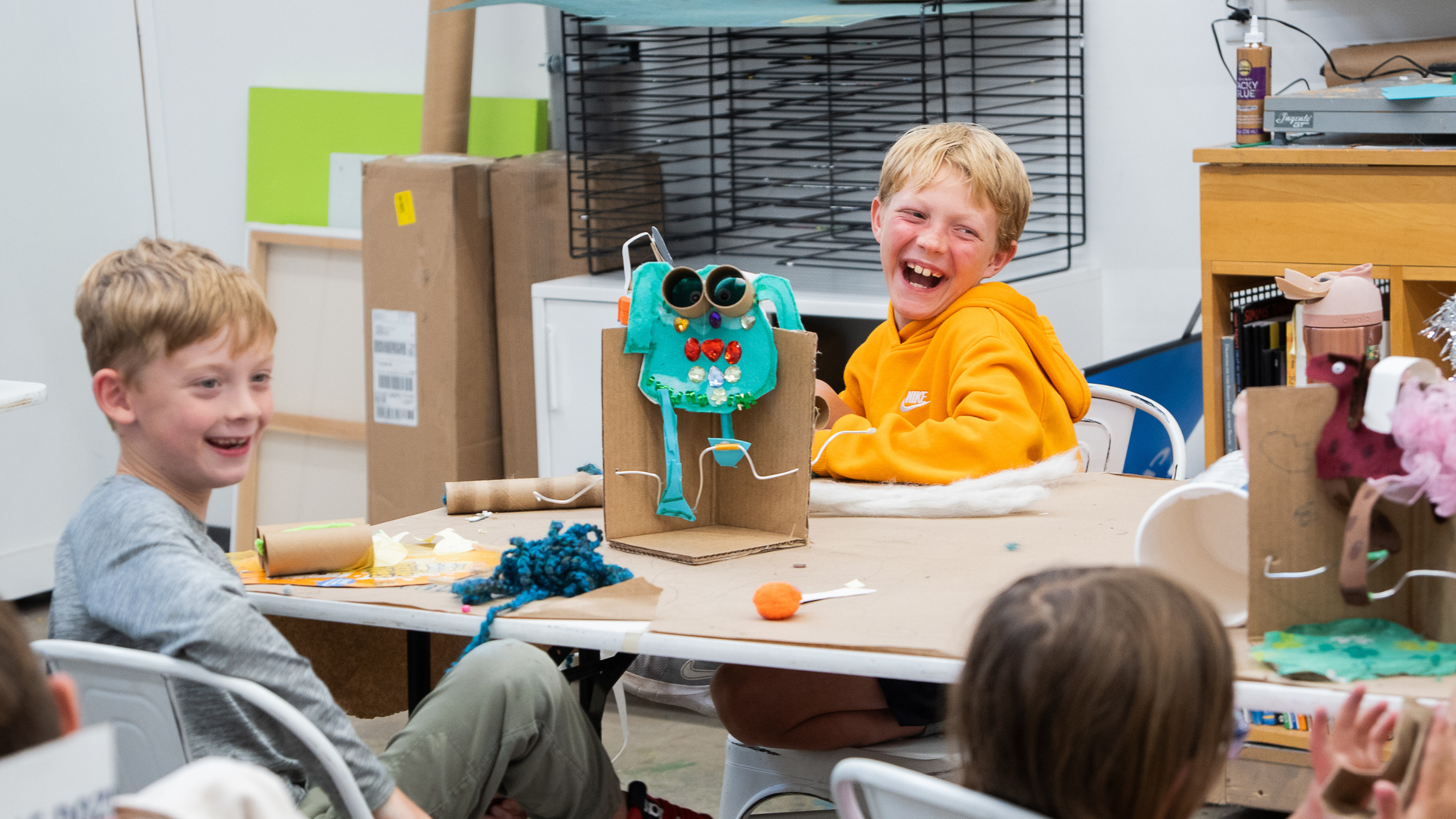
This summer, during Makers in Motion, one of the many West Michigan summer camps offered at the SCA, campers welcomed back guest artist Taylor Scamehorn. Taylor is an interdisciplinary artist with a focus on photography, printmaking, sculpture, drawing, and papermaking. Her creative practice begins with a simple but powerful idea: making art from anything.
About Taylor Scamehorn
Working mainly with found and repurposed objects and materials, Taylor challenges the idea that creativity depends on new supplies or expensive tools. She invites people to look at what already exists around them and imagine the possibility of a new creation. She likes to think of art as both a creative outlet and a kind of technology. It becomes a tool for movement, storytelling, and connection.
Her visit to the Saugatuck Center for the Arts invited young campers to think about transformation and imagine how everyday objects could become something entirely new. For many, it was an introduction to sculpture and the exploration of art, engineering, and movement.
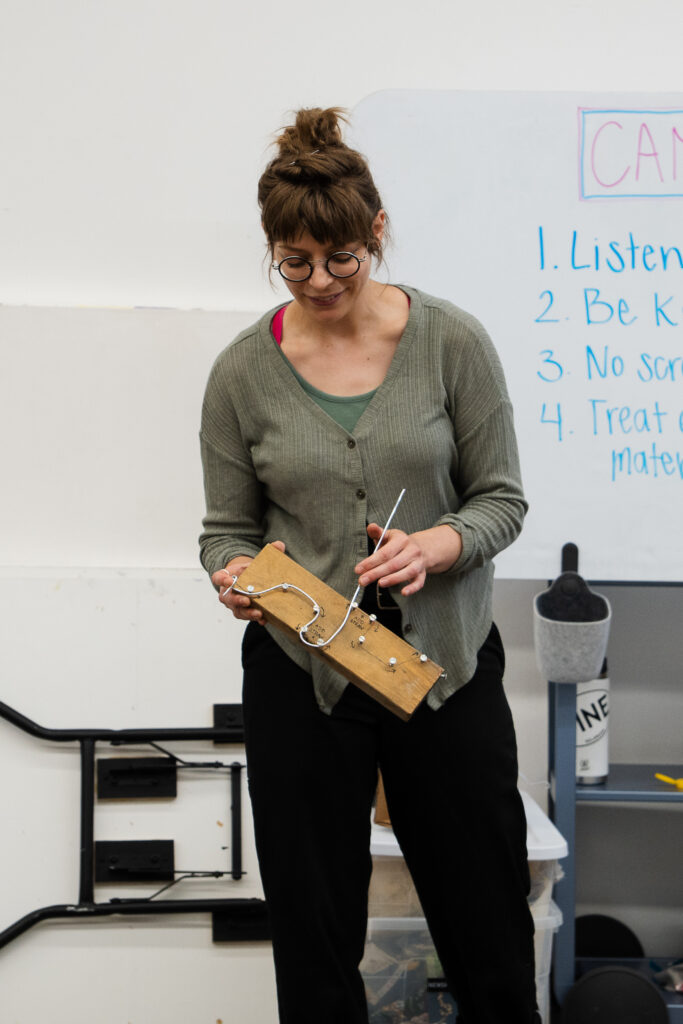
Makers in Motion – A West Michigan Summer Camp
Before campers started building, they sat down for a reading of Rosie Revere, Engineer, a story about a young inventor learning to accept failure as part of the creative process. Through Rosie’s journey of trial and error, campers were introduced to an important idea that would follow into the afternoon: not every idea works the first time, and that’s part of making. The story set the tone for our session, encouraging campers to make their own projects with curiosity and a willingness to keep going even when they encountered challenges.
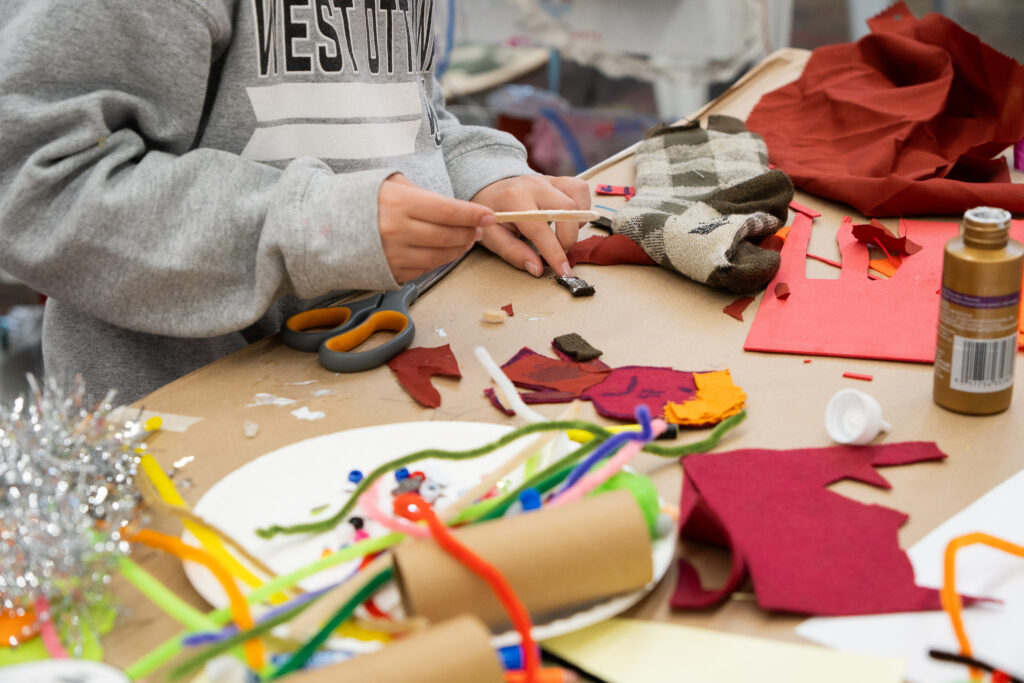
Taylor introduced campers to the world of automata – kinetic sculptures that move through simple hand-built mechanisms. Before building, they brainstormed stories, personalities, and destinations for their creations. By the time the activity began, the studio tables were ready with felt scraps, yarn, googly eyes, beads, and markers.
There was proof of process all throughout the room. Sounds of scissors cutting through paper and fabric filled the air. Questions bounced between tables, and laughter echoed from the walls as campers tried their ideas. They designed their own characters, placing each one on a unique journey through a world of their own making. Moments like these truly make West Michigan summer camps memorable experiences.
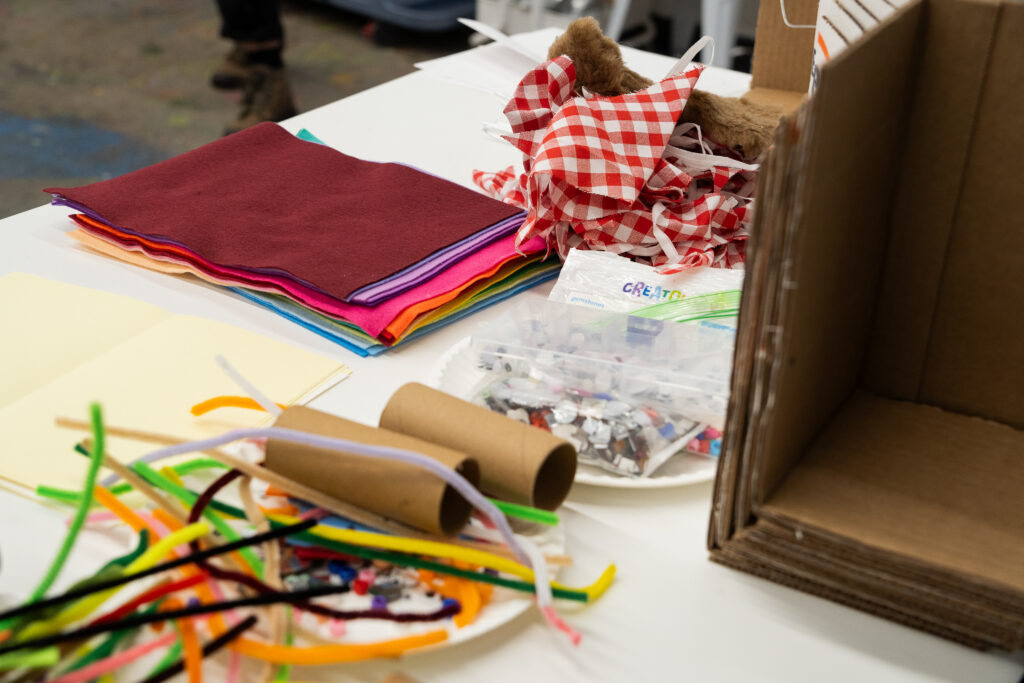
Everyone learned that this process needed patience and experimentation. Building automata required more than just imagination. It made campers slow down and problem-solve. Much like Rosie Revere’s inventions, the automata asked campers to rethink and continue experimenting. When parts didn’t move as expected, or materials shifted in unexpected ways, those moments became opportunities to try something new rather than letting it become a defeating moment.
Their first step was understanding how the hand-crank mechanism worked. Campers had to think about how their character’s body would attach and move. They adjusted proportions and switched materials as they learned what would and wouldn’t work. Instead of aiming for perfection, campers were encouraged to trust their ideas and try again. This allowed campers to connect with Taylor’s own practice, seeing how small structural adjustments could create movement.
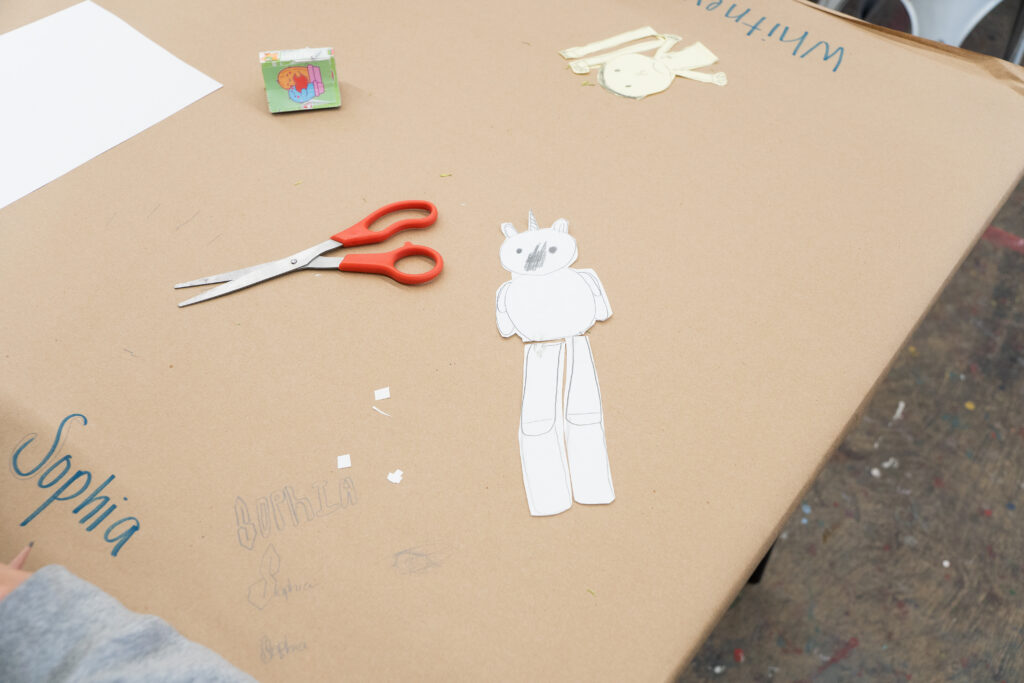
As Taylor led our afternoon session, the room fell into a deep state of focus. Some campers became so absorbed in building that they barely noticed how much time had passed. At one point, a camper looked up and asked, “What time is it?” only to react with surprise when told two hours had gone by. Others hesitated to stop even for a snack, wanting just a few more minutes to glue down details. These small moments showed us the kind of engagement the activity created.
By inviting campers to create with recycled and everyday materials, Taylor showed us that art doesn’t have to begin with new supplies or rigid expectations. It can begin with curiosity and even with what’s already around us. Through shared making, campers not only built moving sculptures but also practiced persistence and creative confidence. Spaces like these remind young artists that the process itself matters too.
Interested in how your child might experience art in a meaningful and impactful way? Explore our West Michigan summer camp options, offered at the Saugatuck Center for the Arts.